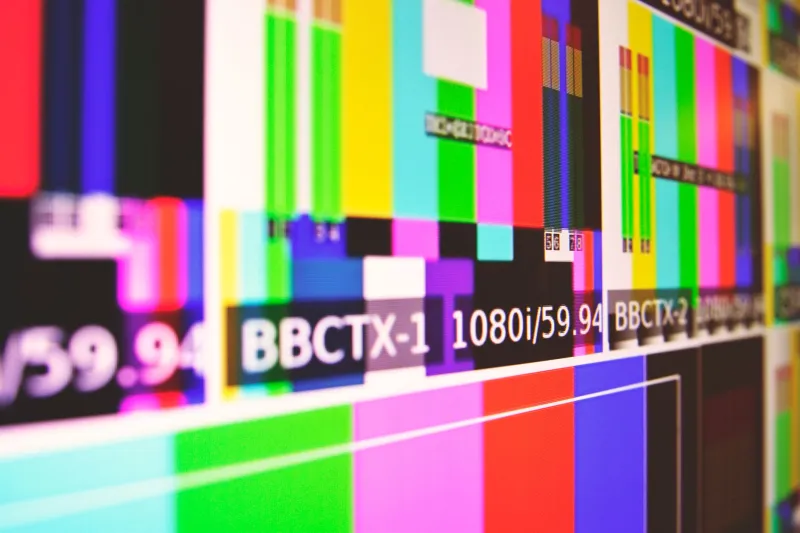
Throttled: The Creators Who Turned ISP Speed Caps Into a Sound
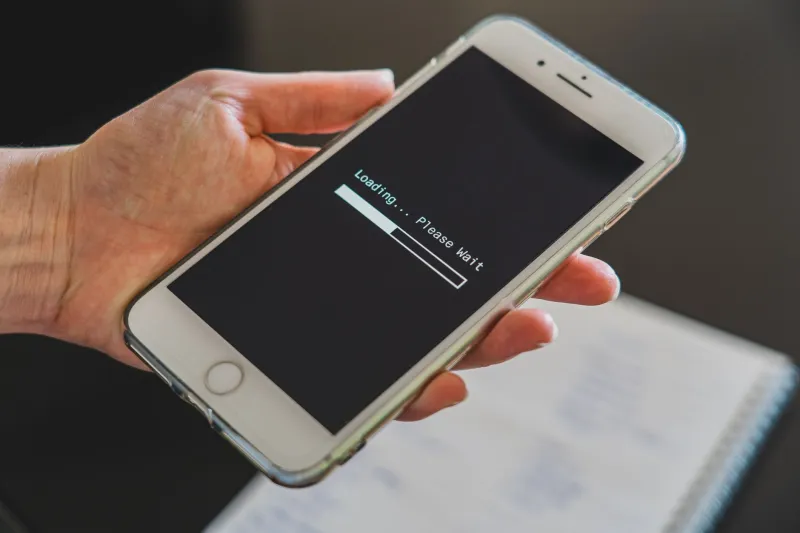
Somewhere in rural Kentucky, a producer named Dex is uploading a track at 0.4 megabits per second. Not because he wants to. Because Comcast decided 7 PM on a Tuesday was the right time to quietly strangle his connection. The file will take forty minutes to move. He's made peace with this. More than that — he's built a career around it.
"The throttle is basically my A&R," Dex told us over a Discord call that dropped twice. "Whatever survives the upload is what people hear. The compression artifacts, the stutter, the way the low end smears when the bitrate tanks — that's the record."
This is not a niche complaint thread. This is a movement.
The Bandwidth Wall as Creative Studio
ISP throttling — the practice of internet service providers deliberately slowing connection speeds, often during peak hours or for specific types of traffic — has been a documented frustration since the net neutrality debates of the early 2010s. But somewhere between the policy fights and the Reddit rage posts, a quieter conversation started happening. A small, scattered community of creators began asking a different question: what if we just worked with it?
The logic isn't that different from what tape musicians did with wow and flutter, or what hip-hop producers did with vinyl crackle. Constraints have always generated aesthetics. The difference here is that the constraint is imposed by a corporation with a quarterly earnings call, which gives the whole thing a particular edge.
For visual artists, throttling creates something specific: partial image loads. The kind you used to see in 2003 when a JPEG would render top-to-bottom in slow horizontal strips. There are photographers in online communities — Discord servers, a few obscure Tumblr successors, one very active IRC channel that we're not going to name — who are deliberately routing their work through throttled connections before publishing, then screenshotting the incomplete renders as the final piece. The resulting images look like something between a Gerhard Richter smear and a corrupted file from a dead hard drive. They're genuinely unsettling. They're also genuinely beautiful.
Lo-Fi's Ugly Cousin
The music side of this is where things get really specific. Lo-fi as a genre has been thoroughly absorbed by the mainstream — the study beats, the anime girl, the Spotify playlist with forty million streams. It's wallpaper now. What's emerging from the throttle community is something nastier and less comfortable.
Call it bandwidth music, call it ISP core, call it whatever — the taxonomy is still getting sorted out in real time. The throughline is audio that sounds like it's being transmitted through a dying connection. Not because it was recorded badly, but because the transmission itself is the instrument. Producers are using throttled upload speeds to introduce degradation at the file-transfer stage, then capturing those artifacts. Others are using software that simulates packet loss and jitter, but the purists — and there are absolutely purists — insist on the real thing.
A producer out of Albuquerque who goes by Hollowrate has been releasing music this way for about two years. Her tracks sound like they're arriving from somewhere far away and not quite making it. Melodies dissolve mid-phrase. Bass frequencies become textures. Vocals turn into something that resembles language without quite being it. "I grew up in a dead zone," she said in a post on her newsletter. "Slow internet wasn't an aesthetic choice for me. It was just Tuesday. At some point I stopped being mad about it and started listening to what it was actually doing."
Resistance in the Latency
There's a political dimension here that the community doesn't always foreground but never fully ignores either. The United States has some of the most expensive and patchwork internet infrastructure in the developed world. Rural and low-income communities get throttled harder and more often. The FCC's net neutrality protections have been gutted, reinstated in pieces, and gutted again depending on which administration is running the country that year.
When creators in these communities make art from throttled connections, there's an implicit critique embedded in the process. They're not pretending the constraint is neutral. They're taking something done to them by a telecom monopoly and converting it into signal. The ISP becomes an unwilling collaborator. The degradation becomes documentation.
Some creators are explicit about this framing. A visual artist in rural Mississippi who posts under the handle @gridpoor has been making a series of works she calls "service agreements" — images that are intentionally run through throttled connections, with the resulting artifacts labeled with the name of the ISP responsible, the time of throttling, and the advertised versus actual speed. They look like corrupted art files. They also look like receipts.
Finding the Frequency
The community organizing around this stuff is, fittingly, not easy to find. There's no central hub, no verified account, no Patreon with tiers. It lives in the spaces the algorithm doesn't index well — small Discord servers, Mastodon instances, forums with no mobile app. Part of that is aesthetic consistency. Part of it is that the mainstream internet's recommendation engines are optimized for smooth, high-resolution, fast-loading content. Work that's built from degradation doesn't surface naturally in those systems. You have to go looking.
That friction is, for a lot of these creators, the point. The throttle doesn't just shape the work — it shapes who finds the work. If your connection can't handle it, if your patience runs out before the file loads, if you're not willing to sit in the latency, then maybe this isn't for you. That's not gatekeeping in the toxic sense. It's more like signal filtering. The bandwidth wall becomes a curatorial mechanism.
Dex put it simply: "Fast internet is for fast content. I'm not making fast content."
What Comes Through
The interesting question isn't whether this is a real movement or an aesthetic pose — it's probably some of both, like everything. The interesting question is what it means that the infrastructure of American internet access is now legible as an artistic medium.
Every throttled upload is a data point about who has bandwidth and who doesn't, about which traffic gets prioritized and which gets squeezed, about the invisible editorial decisions being made by companies most people never think about. When a producer in rural Kentucky makes a record out of that, something that was designed to be invisible becomes audible.
That's not nothing. That's actually kind of the whole thing.
Signal through the static. Find your frequency — even if someone else is deciding how much of it gets through.