Dead Air Revival: Why a New Generation Is Falling Hard for the Formats That Were Supposed to Stay Dead
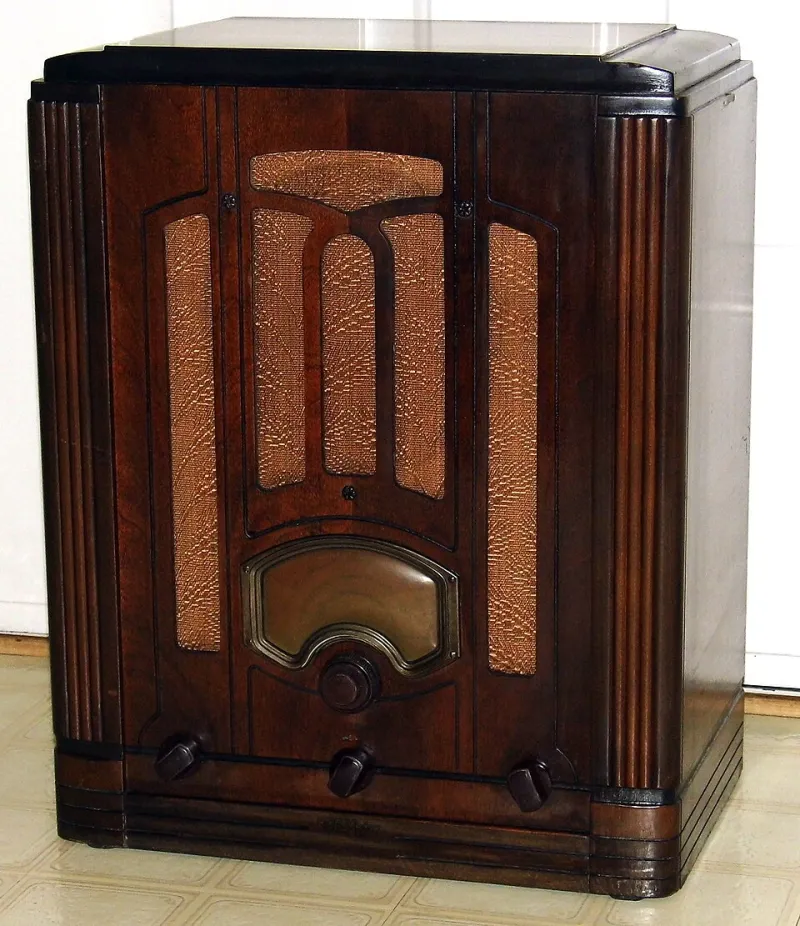
Photo: Joe Haupt from USA, CC BY-SA 2.0, via Wikimedia Commons
There's a specific kind of silence that happens right before a shortwave signal locks in. Static, then more static, then something that almost sounds like a voice — and then, if the ionosphere cooperates, an actual human being broadcasting from somewhere thousands of miles away, completely unaware of who might be listening. No algorithm delivered that to you. No engagement metric shaped it. It just arrived, raw and improbable, out of the air.
That feeling — accidental, unmediated, slightly chaotic — is exactly what a growing slice of the American internet underground is chasing right now. And they're not doing it ironically.
The Graveyard That Started Glowing
Dead media collecting isn't new. People have been hoarding 8-tracks and Betamax tapes and pagers since before the word "nostalgia" got monetized into a content vertical. But what's happening now feels different in texture and intent. The people turning up at ham radio swap meets, bidding on working Minitel terminals, or tracking down operational fax machines through Facebook Marketplace aren't doing it for the aesthetic. They're doing it because they believe these formats actually work better — or at least, work differently — than anything currently on offer.
Take the shortwave crowd. In the US, shortwave radio listenership effectively collapsed in the 2000s when major broadcasters like Voice of America pulled their analog transmissions in favor of online streaming. The hardware became thrift store filler. But in the last few years, communities on Discord and Reddit have been quietly rebuilding the practice from scratch. New listeners — many of them under 30 — are picking up receivers, learning propagation charts, and tuning into the scattered remaining broadcasters: religious networks, numbers stations, pirate operators, weather services. What they keep describing, over and over, is the sensation of receiving something that wasn't curated for them specifically. The signal doesn't know who they are. It doesn't care.
That's the whole point.
Against the Recommendation Engine
If you spend enough time in these communities, a coherent philosophy starts to emerge. It's not anti-technology exactly — most of these collectors are deeply technical, spending hours on circuit repairs and antenna calibrations. What they're against is personalization. The architecture of contemporary digital life, they argue, has made it nearly impossible to encounter something genuinely unexpected. Every platform learns you. Every feed reflects you back at yourself, slightly amplified. The surprise has been optimized out.
Obsolete communication formats, by contrast, are structurally incapable of personalization. A fax machine sends what it sends. A pager delivers what it delivers. A shortwave broadcast reaches whoever happens to be tuned in at that frequency at that hour. The randomness isn't a bug that got patched — it's baked into the hardware at a level no software update can touch.
One collector based in Portland, who runs a small archive of operational telex machines, put it this way in a forum post that circulated pretty widely a few months back: "My telex doesn't know my politics, my watch history, or my income bracket. It is the dumbest, most honest machine I own."
What's Actually Being Preserved
The preservation angle is worth taking seriously, even if it doesn't always get framed that way. A lot of these formats are hovering at the edge of total functional extinction. Working Minitel terminals — the French proto-internet network that predated the web — are increasingly difficult to source in the US, and the technical knowledge required to operate them is held by a shrinking population. Operational RTTY (radioteletype) setups, once standard in newsrooms and military communications, now exist mostly in the hands of amateur radio operators who learned from operators who learned from operators, in an unbroken chain that's getting thinner every decade.
Some collectors are explicitly framing their work as archival. They're documenting operating procedures, recording transmissions, building open-source emulators. There's a loose network of groups doing this work, mostly coordinating through forums that themselves feel deliberately low-fi — plain text, minimal graphics, no engagement metrics visible anywhere.
But even the collectors who aren't thinking in archival terms are doing something important by keeping the hardware functional. A format that only exists in a museum case or a YouTube video isn't really preserved — it's taxidermied. The shortwave listener who actually tunes in at 2 AM to catch a fading signal from a broadcaster in the Dominican Republic is keeping something alive that a server rack full of MP3 archives can't replicate.
The Younger Edge
What's genuinely new here is the demographic. Dead media collecting used to skew heavily toward people who had personal memories of these formats — the guy who used a telex machine at work in 1987, the woman who grew up listening to shortwave broadcasts from behind the Iron Curtain. That cohort is still around and still active, but they're increasingly sharing space with people in their 20s who have no firsthand relationship with any of this hardware.
For that younger group, the appeal seems to be partly aesthetic — there's a whole visual language around analog equipment that's had a long run on Tumblr and Instagram — but it goes deeper than that. Growing up entirely inside algorithmic platforms has produced, in at least some people, a specific kind of hunger for infrastructure that doesn't watch them back. These formats aren't just old. They're structurally incapable of being weaponized against the user in the ways that contemporary platforms routinely are. You can't A/B test a shortwave transmission. You can't split-test a fax.
There's something almost political in that, even when the collectors themselves don't frame it that way.
Signal Worth Keeping
None of this is going to scale. That's sort of the point. The shortwave revival isn't going to displace Spotify. Fax machine archivism isn't challenging email. These are niche practices for people who have decided, for their own reasons, that the mainstream infrastructure of digital communication is missing something they need — and that the thing it's missing got thrown away somewhere back around 1998.
What they're tuning into, ultimately, isn't really a frequency. It's a different relationship with information itself: one where the medium has limits, the signal has noise, and the connection — when it happens — feels like it cost something.
In an environment where everything is instant and everything is tailored and everything is free, that cost might be exactly what makes it feel real.