Bitrate Is a Vibe: How Tech Specs Became the New Streetwear
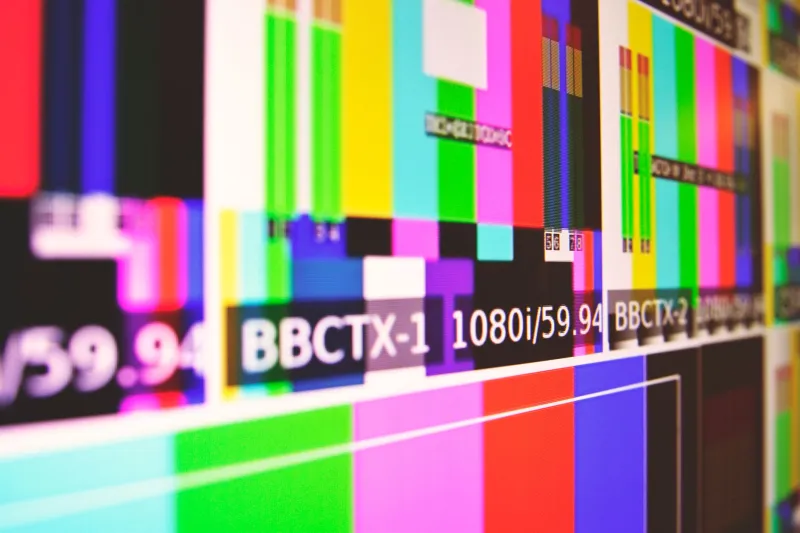
There's a corner of the internet where the flex isn't a fit pic or a follower count. It's a screenshot of an export settings panel. A waveform rendered at 96kbps. A video file encoded in a format that technically shouldn't exist anymore. If you know, you know. And that's kind of the whole point.
Somewhere between the hi-fi maximalism of 4K HDR everything and the lo-fi nostalgia trip of VHS filters, a different conversation has been quietly happening — one that goes a lot deeper than aesthetics and lands somewhere closer to philosophy. The people having it aren't just chasing a vibe. They're making deliberate, almost confrontational choices about the technical containers their work lives in, and they want you to notice.
From Forum Flame Wars to Lifestyle Manifesto
The codec conversation is ancient by internet standards. Go back far enough and you'll find message boards full of people losing their minds over DivX versus XviD, arguing about whether MP3 compression was murdering music or just making it portable. That era had its own tribal energy — the audiophile crowd, the ripping scene, the people who could hear the difference between a 128kbps encode and a 320kbps one and needed you to understand why it mattered.
What's different now is that the argument has flipped. The new generation of codec obsessives isn't fighting for higher fidelity. They're actively choosing lower. Not out of ignorance, and not just for the look — but as a kind of statement. Choosing an older, crunchier codec isn't a compromise anymore. It's a position.
Creators in video-focused online communities — particularly those orbiting experimental filmmaking, underground music production, and the broader world of net art — have started treating technical specifications the way earlier subcultures treated gear. Your DAW settings, your export codec, your sample rate: these aren't just workflow decisions. They're flags you're flying.
The Compression Aesthetic
Here's where it gets interesting. The technical choice and the aesthetic outcome have become inseparable in a way that's genuinely new. When someone decides to shoot on a specific consumer-grade camcorder from 2003 and encode the output in a format that maxes out at a resolution your phone would laugh at, they're not just making something that looks a certain way. They're embedding a whole set of values into the file itself.
There's a concept floating around in these communities — the idea that compression artifacts aren't flaws to be corrected but information to be preserved. The blockiness you get from aggressive MPEG compression, the metallic shimmer of heavily encoded audio, the way a JPEG degrades when you save it too many times — these aren't failures of the format. They're the format talking.
Some people compare it to the way punk producers in the late '70s started treating tape hiss and distortion as sonic signatures rather than things to be cleaned up. Others draw the line back to the early internet, when low-bandwidth constraints forced a kind of brutal design minimalism that people now deliberately recreate. Either way, the logic is the same: the limitation is the aesthetic, and the aesthetic is the statement.
Gatekeeping Through Specs
Let's be real about what else is going on here, though. Because while the philosophical framing is genuine, there's also a pretty clear gatekeeping function at work — and the people doing it aren't exactly trying to hide it.
When a creator in one of these communities talks about "proper" encoding workflows or debates the merits of obscure container formats, they're also drawing a boundary. The technical fluency required to even follow the conversation is a filter. You can't fake knowing what a codec actually does. Either you've gone down the rabbit hole or you haven't, and the community can tell.
This mirrors something that's happened in basically every subculture that's ever developed around specialized knowledge — from record collectors gatekeeping pressings to sneaker culture developing its own authentication rituals. The difference is that codec knowledge is genuinely arcane in a way that most other cultural markers aren't. There's no shortcut. You can't just buy the right thing and belong. You have to actually understand it.
That's a feature, not a bug, for communities that are explicitly trying to stay off the algorithmic radar. Complexity is camouflage.
Optimization as the Enemy
There's also something more pointed happening here — a direct rejection of the platform optimization logic that dominates mainstream content creation. The entire creator economy runs on a set of implicit technical standards: upload at the highest resolution possible, use formats the platform supports natively, compress only as much as you have to. The algorithm rewards clarity, consistency, and ease of processing.
Choosing formats that platforms handle badly — or don't support at all — is a way of opting out of that system. It's not passive resistance. It's deliberate friction, built into the file itself before anyone even watches it. A video that can't be auto-enhanced, auto-captioned, or fed into a recommendation engine without choking on the format is a video that exists slightly outside the normal distribution channels.
Some creators have started talking about this in almost ecological terms — the idea that certain technical choices create a kind of habitat that only specific audiences can access. Bad formats as a selection mechanism. Compression artifacts as a frequency only certain receivers can pick up.
Signal Over Fidelity
The deeper you go into these communities, the more the technical conversation starts to sound like something else entirely. The debates about lossless versus lossy, about container formats and codec efficiency, eventually resolve into something that sounds a lot like a conversation about authenticity.
What does it mean for a digital file to be real? What does it mean for a piece of content to carry the marks of its own creation rather than being polished into something frictionless and platform-ready? These aren't new questions, but the codec obsessives are asking them in a language that's genuinely their own — one built out of export settings and encoding parameters and the specific way certain formats fall apart under pressure.
It's nerdy. It's intentionally obscure. And it's one of the more honest conversations about creative identity happening online right now.
The bitrate is a vibe. But the vibe is actually a philosophy. And the philosophy is: the signal matters more than the fidelity. Find your frequency.