Static Cartographers: The Night Hunters Charting America's Dead Radio Frequencies
There's a frequency out of the Nevada desert that nobody can fully explain. It surfaces a few nights a week, somewhere around 6925 kHz, broadcasting what sounds like a weather report for a city that doesn't exist. No call sign. No FCC registration. Just a voice reading numbers into the dark, and a growing community of listeners who have been recording it for years.
This is the world of the signal hunters — a scattered, loosely connected underground of hobbyists, archivists, and flat-out obsessives who spend their nights scanning the shortwave and AM bands for broadcasts that have no business still being there. Defunct stations. Military spillover. Numbers stations. Ghost signals from transmitters that were supposed to go cold decades ago. They're not doing it for money. Most of them aren't even doing it for clout. They're doing it because the electromagnetic spectrum is full of history that nobody else is paying attention to.
And they're building their own archive of it, one recording at a time.
The Dial as Archaeological Site
Most people think of the radio dial as a utility — you tune to a station, you get content, you move on. The signal hunters see it differently. To them, the spectrum is a layered archaeological site, and every frequency is a potential dig. Signals travel in strange ways. Shortwave broadcasts bounce off the ionosphere and can cover thousands of miles. AM stations bleed across state lines at night when atmospheric conditions shift. Old transmitters, improperly decommissioned, sometimes leak residual energy for years after they were supposed to go silent.
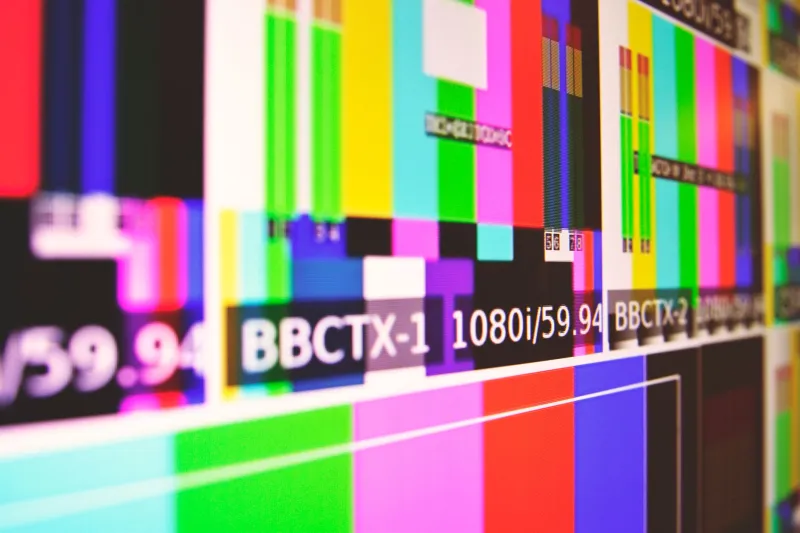
The hunters exploit all of this. They run software-defined radios — SDRs, for the uninitiated — cheap USB dongles that turn a laptop into a full scanning rig capable of sweeping enormous swaths of spectrum in real time. They use waterfall displays, which visualize frequency activity as a kind of flowing color map, to spot anomalies. A spike where nothing should be. A carrier wave with no content. A repeating tone that doesn't match any known beacon.
When they find something, they record it. Then they post it.
The Community That Built Itself in the Dark
The online infrastructure for this stuff is predictably scattered. There's no single hub, no official forum with moderators and community guidelines. It lives in Discord servers with vague names, subreddits that require some digging to find, and old-school mailing lists that somehow still function. Some of the most respected archivists in the space maintain personal websites that look like they were built in 2003, because they were, and because nobody has seen a reason to update them.
What the community has built, collectively, is genuinely impressive. Crowd-sourced databases of unidentified signals. Audio archives stretching back to the early days of internet file sharing. Frequency logs with timestamps, GPS coordinates, atmospheric conditions, and equipment specs. It's the kind of documentation that a serious institution would spend serious money to produce — and it exists entirely outside any institutional framework.
Regular contributors range from retired engineers who spent careers in broadcast to teenagers in rural Ohio who picked up their first SDR dongle for forty bucks on Amazon and never looked back. The knowledge transfer between those two groups is one of the quietly remarkable things about the scene. Old-timers who remember when these stations were actually on the air sit next to kids who have never known a world without streaming, and they find common ground in the signal.
What They're Actually Finding
Some of the discoveries are mundane — old AM stations whose transmitters were sold off and repurposed, still occasionally blipping out carrier waves on their original frequencies. Some are genuinely strange. The numbers stations are a particular obsession. These are shortwave broadcasts, documented since at least the Cold War, that transmit sequences of numbers or letters with no explanation. Governments have never officially acknowledged them. The general consensus is that they're used for covert communications, but the hunters aren't always satisfied with that answer.
Then there's the category they call "ghost stations" — broadcasts that match the format and frequency of defunct American radio stations closely enough to suggest some kind of continuity, but that can't be traced to any current license holder. A few of these have been documented in detail. One appears to originate somewhere in the upper Midwest and broadcasts old country music from what sounds like the 1970s, interrupted occasionally by what might be a local weather insert recorded decades ago. Nobody has identified it. Nobody has stopped it.
Military spillover is another rich vein. The US military uses enormous amounts of spectrum, and not all of it is tightly controlled. Hunters have documented training transmissions, navigation beacons from decommissioned bases, and at least one recurring broadcast that appears to be an automated system transmitting on a schedule that nobody updated when the original program ended.
Why This Matters Beyond the Hobby
Here's the thing about electromagnetic history: it doesn't get preserved anywhere. The FCC keeps licensing records. Broadcast museums hold equipment and ephemera. But the actual signal record — what was on the air, when, and what it sounded like — is almost entirely undocumented. Commercial radio stations don't archive their own output. Local AM stations that went dark in the 90s took their history with them.
The signal hunters are filling that gap, whether they think of themselves that way or not. Their recordings capture something real about how America communicated with itself across the twentieth century. Farm reports. Emergency alerts. Late-night talk. Spanish-language broadcasts that served communities the mainstream dial ignored. It's a sonic history of the country that exists in no library, in no university archive, in no government database.
It exists on hard drives in spare bedrooms in Kansas and Florida and upstate New York, maintained by people whose names most of the world will never know.
Tuning Into the Frequency
If you want to find the community, you can. It takes some effort — which, honestly, is probably by design. The people doing this work aren't particularly interested in being found by everyone. They're interested in being found by the right people. The ones who will listen to a two-minute recording of an unidentified signal at 3 AM and feel something shift in their chest.
That's the frequency this whole thing runs on. Not the electromagnetic kind, though there's plenty of that. The other kind — the one that connects people who are paying attention to the same thing that everyone else walked past.
The dial is full of ghosts. Some people are just listening hard enough to hear them.