Lag Lords: The Fringe Speedrunners Who Are Accidentally Mapping Tomorrow's Internet
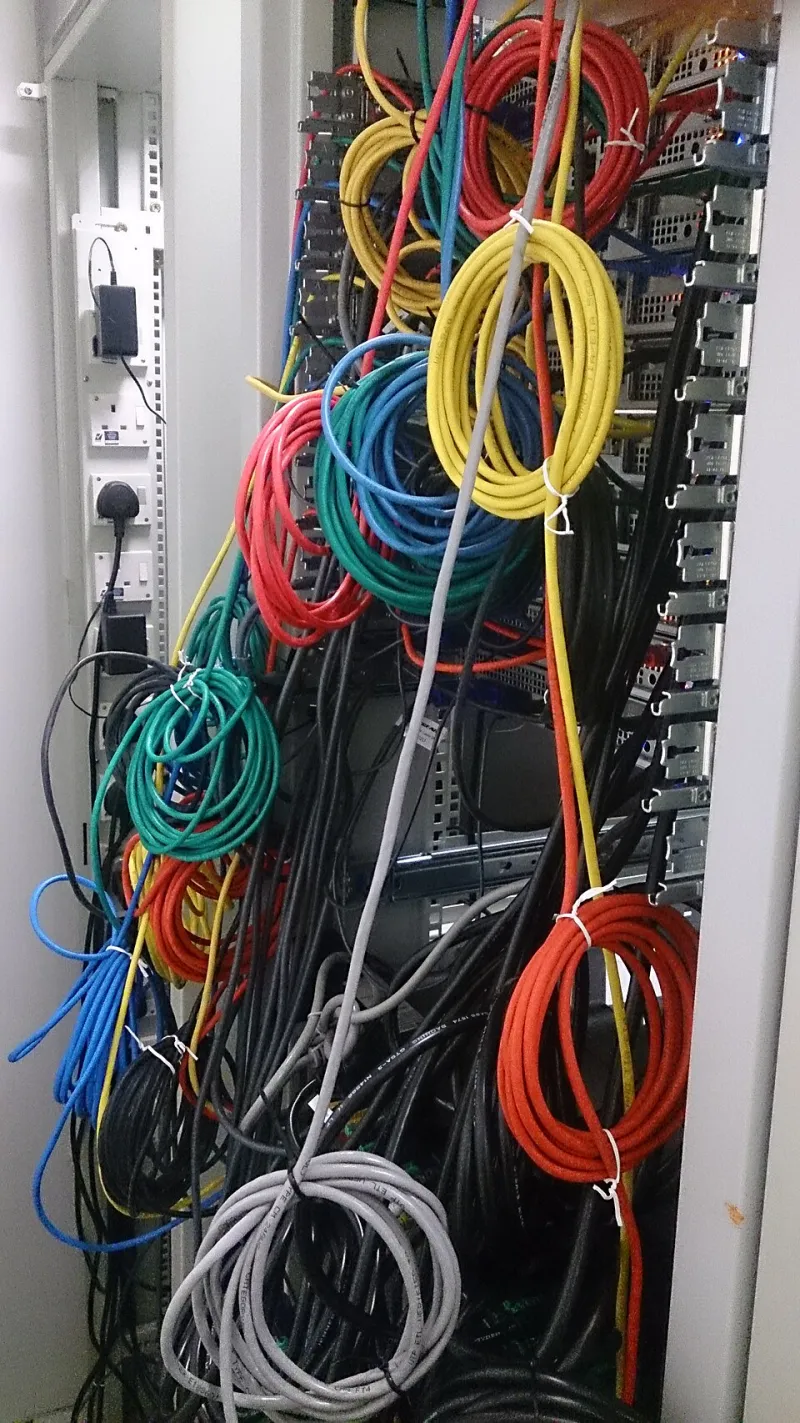
Photo: ProjectManhattan, CC BY-SA 3.0, via Wikimedia Commons
There's a guy — goes by nullroute_88 — who spent the better part of last winter flooding his home connection with synthetic traffic just to watch it choke. Not because he was attacking anything. Not because he was getting paid. He was bored, basically, and curious about what his ISP was lying to him about. What he found, buried in the jitter patterns of a saturated upload stream, was something he couldn't fully explain: a rhythmic degradation that seemed to sync up with routing decisions happening two hops upstream from his modem. He posted his logs. A few hundred people who understood what they were looking at lost their minds.
This is what's happening out there, quietly, in the frequency bands most people never tune to.
Speed as Obsession, Chaos as Method
The speedrunning community — the gaming kind — has always had a weird relationship with technical depth. These are people who reverse-engineer collision physics to save four frames. The bandwidth obsessives operate on a similar frequency, except instead of video game geometry, they're pulling apart TCP handshakes, routing tables, and ISP throttling logic like it's a puzzle with a prize nobody's announced yet.
Call them bandwidth prophets, lag lords, packet shamans — the terminology shifts depending on which corner of the internet you're in. What they share is a methodology that looks like chaos from the outside but is actually pretty disciplined: push a system past its rated limits, document what breaks, figure out why it broke that specific way, then do it again slightly differently. It's empirical science with a jailbroken attitude.
Some of these folks are running multi-gigabit home labs. Others are working with consumer hardware that would make a Comcast technician wince. The economic range is part of the point — they're not operating from inside well-funded research environments. They're working from apartments in Columbus and Tucson and Baton Rouge, which means the vulnerabilities and patterns they find are ones that affect regular infrastructure, not theoretical enterprise setups.
What They're Actually Finding
Here's where it gets genuinely interesting. When you stress a network connection hard enough, in specific ways, you start seeing behavior that isn't documented anywhere in the public-facing specs. Routers make decisions they're not supposed to be making. Traffic gets deprioritized by criteria that don't match what ISPs claim in their service agreements. Latency spikes appear in patterns that suggest automated management systems are doing something — something — but the what and why are opaque.
A loose collective operating mostly through a handful of invite-only Discord servers has been cataloging these anomalies for a couple of years now. They've identified what they're calling "management shadows" — windows of time, usually late at night or during specific high-traffic events, where their connections behave in ways that suggest ISP traffic shaping algorithms are cycling through different prioritization states. The patterns repeat. Predictably. In ways that a person with enough data could, theoretically, time their traffic around.
This isn't new in concept — network researchers have studied ISP throttling for years. What's different here is the granularity and the volume of distributed observation. These aren't controlled lab experiments. They're thousands of data points from real consumer connections across different carriers, different regions, different hardware configurations. The noise is high, but the signal is getting clearer.
Accidental Futurism
The thing about poking at the edges of how a system behaves today is that you sometimes end up describing how it's going to behave tomorrow. Network infrastructure evolves — not randomly, but along lines of economic pressure, hardware capability, and the accumulated decisions of engineers solving specific problems. If you understand the stress points of today's routing logic, you're holding a partial map of where the next generation of infrastructure has to go.
Some of what these communities have documented — the management shadow patterns, the asymmetric throttling behaviors, the weird handshake artifacts that appear under sustained load — lines up with architectural directions that are showing up in technical literature two or three years later. Not because the researchers read the Discord logs. Because they're all looking at the same underlying constraints.
nullroute_88 doesn't have a computer science degree. He works in logistics. But his documentation of that winter's jitter patterns got quietly passed around in some circles where people do have the credentials, and some of those people got very interested very fast.
The Language Problem
Here's the friction point: these communities don't communicate in ways that translate cleanly to institutional science. The documentation is scattered across forum posts, Discord message histories, pastebin dumps, and the occasional YouTube video with twelve hundred views. The vocabulary is informal, sometimes invented, and occasionally just wrong in ways that make the right intuitions harder to extract.
There's also a cultural resistance to formalization. A significant portion of the people doing this work don't want to be legible to the institutions that would benefit from their findings. Some of that is ideological — a real distrust of ISPs and the regulatory frameworks that let them operate the way they do. Some of it is just the standard underground community instinct to keep the door small enough that only the right people can fit through it.
Which means a lot of genuinely interesting empirical work is sitting in formats that won't survive the next server wipe.
Frequency Check
There's a version of this story where someone builds a bridge — a translator layer between the obsessive fringe documentation and the institutional research pipeline. It's happened before in other domains. Security research has a whole economy built on exactly that translation, moving findings from the underground into the CVE database and eventually into patched software.
Network behavior research doesn't have that pipeline yet, at least not one that reaches down to the consumer-connection level. And so the lag lords keep running their tests, keep posting their logs to servers with no archiving policy, keep speaking a language that machines could parse better than most humans.
The internet they're describing hasn't been built yet. But they're already living in it.