Glitch Is the Message: Why a Generation Chose Noise Over Clarity
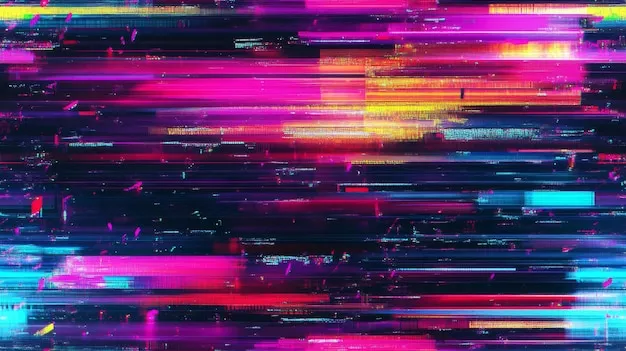
Photo: VHS glitch aesthetic lo-fi television static noise art, via img.freepik.com
Your phone can shoot 4K at 120 frames per second. Streaming platforms deliver near-cinema-quality video to a screen in your pocket. AI tools can upscale, denoise, and sharpen almost any image into something crisp and clean. We are living inside an era of almost absurd visual and audio fidelity.
And a huge chunk of the internet is responding by making everything look like a busted VHS tape from 1987.
This isn't an accident. It's not nostalgia in the simple, sentimental sense. What's happening with lo-fi aesthetics across social media, streaming, and digital art right now is something more deliberate and more interesting than just missing the past. It's a refusal — and understanding what exactly is being refused tells you a lot about where online culture has landed.
The Lo-Fi Moment That Never Really Ended
If you want a starting point, lo-fi hip-hop is as good as any. The genre — or more accurately, the aesthetic — exploded in the mid-2010s on YouTube, built around looping beats layered with vinyl crackle, tape hiss, and the warm, slightly blurry quality of music that sounds like it was recorded in a basement in 1993. The visual identity matched: anime-adjacent lo-fi study girl, rain on windows, the glow of an old monitor.
The thing is, none of this was actually lo-fi in any technical sense. These tracks were produced on modern equipment, often with considerable skill, and then treated to sound degraded. The imperfection was engineered. The noise was chosen.
That distinction matters more than it might seem. This wasn't about inability or limitation. It was aesthetic philosophy — a conscious argument that the warmth, the imperfection, the humanness of older recordings carried something that high-definition clarity had stripped out.
Emulation Culture and the Value of Artifacts
Video game emulation communities have been running a parallel experiment for years. The debate inside those spaces over whether to play old games with modern upscaling filters or with accurate CRT simulation is, on the surface, a technical argument. Underneath it, it's a philosophical one.
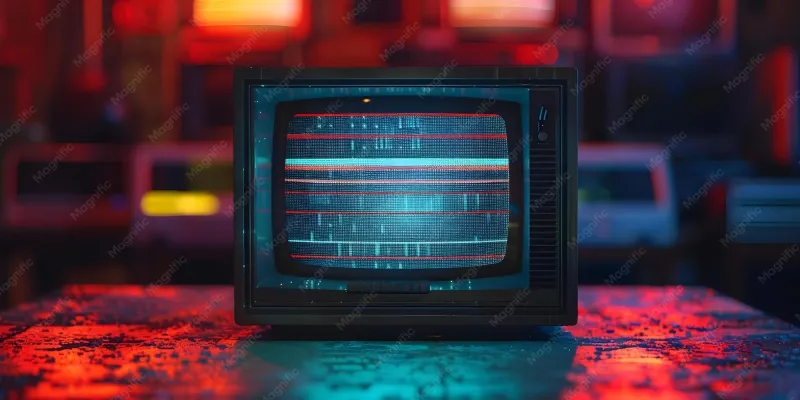
CRT filters — scanlines, phosphor glow, the slight blur of an old television — are artifacts of a delivery system that no longer exists. They were never meant to be part of the art. But for an entire generation that grew up with them, they became inseparable from how those games felt. Stripping them out in pursuit of pixel-perfect clarity produces something that looks technically superior and experientially wrong.
The emulation community's solution — meticulously recreating the flaws of obsolete hardware — is a perfect microcosm of the larger dynamic. The artifact becomes the authentic. The degradation carries the meaning.
The Algorithm Problem
Here's where the rebellion angle gets real. Platforms like TikTok, Instagram, and YouTube are optimization machines. Their recommendation systems reward content that performs well, and performance is measured in engagement metrics that trend heavily toward polished, high-retention, visually clean production. The algorithm doesn't love mess. It loves clarity, quick cuts, bright colors, and faces.
Over time, the content that surfaces most reliably starts to look and sound like content that was designed by a committee to be maximally palatable. Because, increasingly, it was. There's an entire industry of creators studying platform analytics and reverse-engineering what the algorithm rewards, then producing content accordingly. The result is a certain visual and tonal homogeneity that spreads across the For You Page like a monoculture.
Against that backdrop, grainy footage and lo-fi audio aren't just aesthetic choices. They're a signal that something wasn't optimized. That somebody made a decision the algorithm wouldn't have made. That there's a human being in here somewhere, operating outside the system's preferences.
Whether or not that's actually true in any given case is almost beside the point. The feeling of resistance is what's being sold and consumed.
AI Glitch and the New Weird
The most recent chapter in this story involves AI-generated content, and it's genuinely strange. As AI image and video tools have gotten more capable, a subset of creators has started specifically prompting for glitch aesthetics — deliberately generating content that looks corrupted, degraded, or like it's falling apart at the seams.
This is imperfection twice removed. You're using a highly sophisticated machine learning system to produce something that looks like a broken machine. The irony is so thick you could choke on it, but it also makes a weird kind of sense. If AI-generated content represents the ultimate optimization — content produced without human limitation — then AI-generated glitch content is that system eating its own tail. It's the algorithm dreaming about what it would look like to fail.
Some of this work is genuinely unsettling and interesting. Some of it is just vibes. But all of it is pointing at the same cultural anxiety: a suspicion that too much polish equals too much control.
When Imperfection Is the Most Calculated Choice
The honest complication in all of this is that lo-fi and glitch aesthetics have been thoroughly absorbed by mainstream commercial culture. Brands run VHS-filter ads. Spotify playlists algorithmically serve lo-fi study music to millions. The aesthetic of rebellion has become a genre, and genres get commodified.
There's a version of this critique that says the whole thing was always fake — that choosing noise over clarity is just another form of optimization, just targeted at a different demographic. And that's not entirely wrong. The most viral lo-fi content is still engineered for virality. The glitch is still a product.
But there's something reductive about stopping there. Cultural movements don't have to be pure to be meaningful. The impulse driving people toward degraded aesthetics — the sense that algorithmic perfection has flattened something important, that noise carries information that clarity destroys — is a real response to a real condition.
The signal got too clean. Some people started missing the static. That's not nothing. That's the frequency a whole generation is tuning into right now, whether the platforms want them to or not.