Format Flex: When File Extensions Became the New Drip
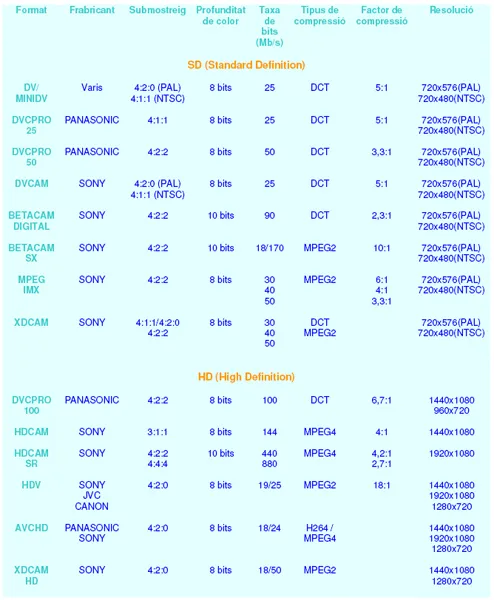
Photo: Chiwed, Public domain, via Wikimedia Commons
There's a conversation that happens in Discord servers, Reddit threads, and production forums across the internet that sounds like pure gibberish to anyone outside the bubble. Someone posts a track, a short film, a photo set — and before anyone even engages with the content, the comments fill up with questions about the pipeline. What codec? What sample rate? Did you export in ProRes or H.264? The creative work itself becomes almost secondary to the metadata surrounding it.
This is where we are now. File formats have quietly evolved from dry technical specifications into full-blown cultural currency.
The Audiophile Playbook Goes Mainstream
This phenomenon didn't start with video creators or photographers. The audiophile community has been doing this for decades — treating FLAC (Free Lossless Audio Codec) as a kind of moral high ground above the MP3-listening masses. The argument was always framed as being about quality, but anyone who spent time in those spaces knows it was equally about belonging. Owning a FLAC library was a signal that you took music seriously. That you weren't some casual streaming-service drone.
That gatekeeping logic has since metastasized across every creative discipline online.
Music producers on platforms like Splice and Bandcamp now routinely call out their bit depth and sample rates in descriptions — 24-bit/96kHz becoming a kind of flex that communicates seriousness before a single note plays. The actual audible difference to most listeners? Debatable at best. The cultural difference? Enormous. In these communities, format literacy functions like a secret handshake. Getting it wrong — or worse, not knowing — marks you as an outsider immediately.
The ProRes Pipeline and the Filmmaker Identity
Film and video production culture has its own version of this arms race, and it's gotten genuinely wild. ProRes RAW, BRAW (Blackmagic RAW), and Cinema DNG have become identity markers as much as camera brands. A certain type of indie filmmaker will tell you they shoot BRAW before they tell you what the film is about.
There's a real technical case for these formats — they preserve more color information, they're more flexible in post-production, they're what the big houses actually use. But the way they get deployed in conversation online has drifted pretty far from purely practical territory. Posting a YouTube video and mentioning in the description that the footage was shot in ProRes and graded in DaVinci Resolve isn't just workflow transparency. It's positioning. It's saying: I know the language. I operate at a certain level.
The irony is that the final output — compressed down to H.264 or H.265 for streaming, viewed on a phone screen — often looks identical to something shot in a more accessible format. The status exists almost entirely in the process, not the product.
WebP and the Nerd Credibility Economy
Even the relatively mundane world of web image formats has gotten pulled into this orbit. WebP, Google's open image format designed for efficient web delivery, became a minor cultural flashpoint when it started getting pushed as the standard for web images. Suddenly, developers and designers were signaling their technical seriousness by how they handled image formats — whether they were serving next-gen formats, whether their pipelines were optimized, whether they even knew what WebP was.
For the hyper-online crowd that cares about this stuff, it's another layer of the same dynamic. Knowledge of obscure specifications becomes proof of authenticity. It separates the people who are serious from the people who are just playing around.
Gatekeeping as Cultural Capital
Sociologist Pierre Bourdieu had this concept of cultural capital — the idea that knowledge, tastes, and credentials function as a form of social currency in much the same way money does. Online creator communities have basically built entire economies on this principle, and file formats are one of the more unexpected places it shows up.
The gatekeeping around production quality isn't entirely cynical. Some of it genuinely comes from a place of caring deeply about craft. Film restoration communities, for example, have done extraordinary work preserving movies in formats that maintain as much of the original information as possible — and the obsessive attention to codec standards in those spaces comes from real dedication to the material.
But there's also an undeniable social function happening. Knowing the right formats, using the right terminology, having the right pipeline — these things establish you within a community hierarchy. They're a frequency you have to tune into. Get on the right wavelength and doors open. Show up with MP3s and lossy JPEGs and you'll feel the temperature drop.
When the Signal Becomes the Noise
The interesting tension in all of this is what happens when format obsession starts to overshadow actual creative output. There are producers with immaculate, technically perfect pipelines who are making genuinely forgettable music. There are filmmakers who can talk for an hour about their acquisition format who have nothing interesting to say with the camera.
Creator communities are increasingly aware of this contradiction, even if they don't always resolve it cleanly. You'll find threads in production forums where someone finally breaks and says: does any of this actually matter if the song isn't good? The responses are always split. Half the room agrees. The other half doubles down on the technical standards, because the standards are the point — or at least, they've become the point.
Format culture online is, at its core, a search for authenticity in a space where authenticity is genuinely hard to verify. When you can't always hear or see the difference in the final product, the process becomes the proof. The codec becomes the credential.
Whether that credential means anything beyond the community that recognizes it is a different question entirely. But inside those communities — in those Discord servers and forum threads and comment sections — it means everything. That's how status works. It doesn't have to be universal. It just has to matter to the people in the room.