Ghost Frequencies: Five Internet Subcultures That Refused to Die
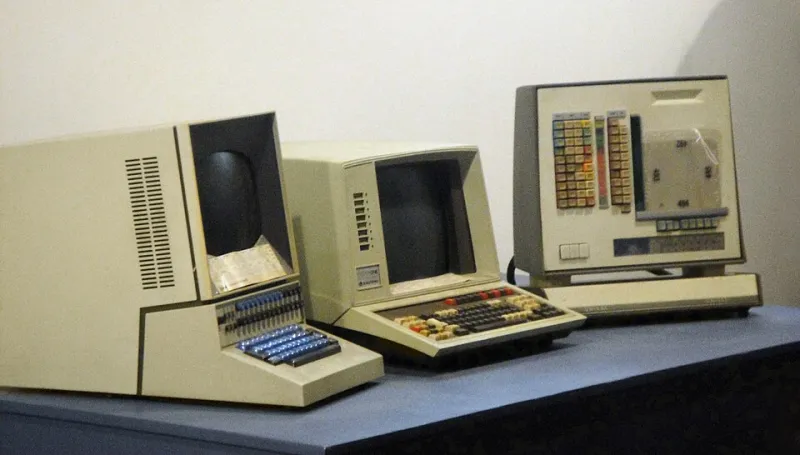
Photo: Marie Mosley, CC BY 2.0, via Wikimedia Commons
The Internet Has a Long Memory
Every few years, some tech journalist writes the obituary for forum culture. Message boards are dead, they say. Discord killed IRC. Reddit ate everything. The algorithm won.
And then you stumble across a phpBB forum with 40,000 posts from the last six months, hosted on a domain that looks like it was registered when Napster was still legal, and you realize the obituary was written by someone who stopped looking.
The pre-social media internet didn't vanish. It compressed. It got quieter. It moved to invite-only servers and mailing lists and forums that deliberately don't optimize for search engine visibility. The people who built those spaces — and the cultures that grew inside them — decided, consciously or not, that obscurity was preferable to the alternative. What they've maintained in that obscurity is something increasingly rare: genuine community continuity, cultural memory that stretches back decades, and an identity that doesn't shift with every algorithmic update.
Here are five of them, still transmitting in 2024.
1. The Synth Underground: Vintage Gear Obsessives Who Never Needed Instagram
There is a forum — we're deliberately not naming it, because its regulars prefer it that way — dedicated entirely to vintage analog synthesizers, drum machines, and the arcane art of keeping 40-year-old electronics alive. It has been running continuously since the early 2000s. Its interface has not meaningfully changed since the Bush administration. Its search function is, charitably, ornery.
It also contains some of the most technically dense, genuinely useful information on vintage gear repair, firmware modification, and circuit-bending that exists anywhere on the internet. Members have collectively documented hardware quirks that the original manufacturers either never acknowledged or have long since forgotten. There are threads with hundreds of replies that read like collaborative technical papers.
"We don't need to be on Reddit," one longtime member explained in a thread about exactly this topic, which surfaced when a newcomer asked why the community wasn't more active on social media. "Everything we need is already here. New people find us when they actually need us, not when the algorithm decides to show us to them."
The gatekeeping is soft but real. The culture rewards patience and specificity. And the community has maintained a consistent identity across more than twenty years because it never chased an audience it didn't already have.
2. The Abandoned Show Fandom That Refused Closure
In the mid-2000s, a cult sci-fi series aired on a mid-tier cable network, got modest ratings, confused network executives, and was canceled after two seasons. It has never been revived. It has no streaming deal. Its cast has largely moved on.
Its fan community is more active today than it was in 2007.
Spread across a legacy forum, a Discord server with tiered channels organized by episode, and a wiki that's been continuously updated since the show's cancellation, this fandom has evolved into something that transcends the original source material. Members write long-form analytical essays. They've produced fan audio dramas. They maintain a shared continuity of headcanon so elaborate and internally consistent that newcomers are sometimes surprised to discover it isn't official.
What's kept this community alive isn't nostalgia exactly — though that's part of it. It's the fact that the absence of new official content created a creative vacuum that the community filled itself. With no algorithm surfacing the show to new audiences, every new member finds the community through genuine searching, which means they arrive with a level of investment that casual fans never develop.
The signal is weak. The receivers are dedicated.
3. The Demoscene: A Digital Art Movement That Predates the Web
The demoscene is one of the oldest continuous digital subcultures in existence, and outside of a specific slice of the tech world, almost nobody in the US has heard of it.
Originating in European hacker and gaming communities in the late 1980s, the demoscene is built around "demos" — real-time audio-visual programs, often compressed to absurdly small file sizes, that push hardware to its absolute limits. Think of it as competitive digital art with a heavy emphasis on technical constraint. A 64-kilobyte demo that renders a convincing three-dimensional landscape with dynamic lighting and an original soundtrack is considered a serious artistic achievement.
In 2024, the scene is genuinely thriving. Annual events like Revision in Germany draw hundreds of competitors and thousands of online viewers. IRC channels that have been running since the 1990s are still active. The community's forums are dense with technical documentation, creative philosophy, and a culture of peer critique that makes most contemporary online art spaces look superficial by comparison.
The demoscene is listed as an intangible cultural heritage in Finland, Germany, and Poland. In the US, it's almost entirely unknown. That gap between its cultural significance and its mainstream invisibility is, for many of its members, precisely the point.
4. The Weird Fiction Collective That Lives in Email
Somewhere in the country, a mailing list for readers of experimental and weird fiction has been running for over fifteen years. It has never had a social media presence. It has never been written about in any mainstream publication. Its membership has stayed deliberately capped — new members are added only when existing members leave, and admission requires a recommendation from a current member plus a writing sample.
What circulates on this list is a mix of reading recommendations, original short fiction, critical essays, and long argument threads about the nature of horror, the uncanny, and the limits of narrative form. Several members have gone on to publish work that's been recognized in the genre's major venues, though the list itself is never mentioned in their bios.
The deliberate scarcity is the feature. When the audience is small enough that every voice carries weight, the quality of discourse changes. This community has maintained that quality by refusing to scale.
5. The Retro Computing Collective That's Building New Software for Dead Hardware
There is a community of programmers who write new software for computers that were discontinued before most of their members were born. Not emulation — actual software, running on actual hardware, solving problems that the original manufacturers never anticipated because the problems didn't exist yet.
They've built a modern web browser (of sorts) for a machine from 1985. They've written encryption tools for hardware that was designed a decade before encryption was a civilian concern. They've created music production software for computers whose original audio capabilities were, generously, limited.
The community lives across a handful of forums, a mailing list, and an annual online event that draws hundreds of participants. Its members range from teenagers who got into retro computing through YouTube rabbit holes to engineers in their sixties who worked on the original hardware.
What holds the community together isn't just nostalgia or technical challenge, though both are real. It's a shared philosophical commitment to the idea that computing should be comprehensible — that a person should be able to understand, completely, the machine they're using. Modern hardware and software make that impossible. These old machines don't.
Why They Persist
The through-line across all five of these communities is something that sounds almost counterintuitive in 2024: they've survived because they didn't grow. By staying off the mainstream radar — sometimes deliberately, sometimes by circumstance — they avoided the growth cycles that tend to dilute online communities into something unrecognizable. They didn't have to absorb waves of new users who arrived with different expectations. They didn't have to optimize their culture for discoverability.
They found their frequency and they stayed on it.
In a media landscape where the dominant logic is reach, scale, and growth at any cost, there's something genuinely radical about a community that decides small is correct. That the signal being narrow is the whole point. That the right 300 people are worth more than the wrong 300,000.
The mainstream internet is loud. These places are quiet. And in the quiet, something real has been building for a very long time.
If you know how to listen, you can still hear it.