Save Everything: The Obsessive Archivists Downloading the Internet Before It Disappears

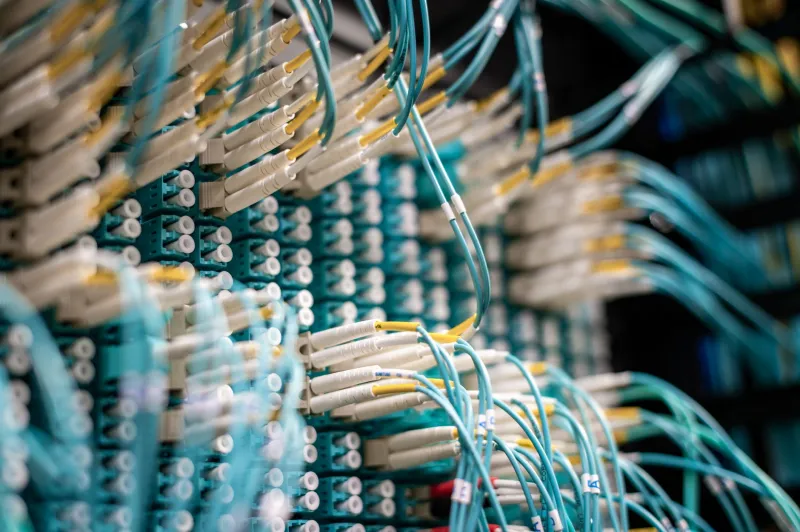
Photo: smial (talk), FAL, via Wikimedia Commons
The web forgets constantly. Not dramatically — not all at once — but in slow, quiet deletions. A forum thread goes 404. A hosting service pulls the plug. A domain expires and some parking page replaces fifteen years of conversation. Most people never notice. A small, deeply committed group of people notice everything.
They call themselves different things. Digital archaeologists. Bandwidth hoarders. Preservation nerds. What they share is a compulsion: grab it before it's gone. And what they're building, collectively, is something stranger and more valuable than most people realize — a shadow archive of how Americans actually lived online, as opposed to how we've decided to remember it.
What Gets Lost When the Server Goes Dark
Here's the thing about digital culture: it feels permanent right up until the moment it isn't. You assume the thread is still there. You assume the site is still indexed. Then one day you go looking for that Newgrounds animation you watched in 2003, or the specific forum where someone explained exactly how to mod your first console, and it's just... gone. No memorial. No forwarding address. Just absence.
The Wayback Machine captures a lot. But not everything — and not always cleanly. Dynamic content, password-protected forums, Flash-dependent pages, comment sections that loaded via third-party scripts: huge swaths of early web culture exist in states the Wayback Machine either missed entirely or preserved in broken, half-rendered fragments. The archivists know this. It's basically what radicalizes them.
"Once you start actually looking at what's been lost, you can't stop," says one collector who goes by the handle Ferrite online and maintains what he estimates is around 40 terabytes of archived web content in his home in rural Ohio. "It's not nostalgia exactly. It's more like — you realize the historical record has these massive holes in it, and most people don't even know the holes are there."
The Technical Grind
Preservation sounds romantic. The practice is largely tedious.
Most serious collectors use tools like HTTrack, wget, or custom Python scrapers to crawl and download sites before they vanish. The workflow involves constant monitoring — RSS feeds for domain expiration notices, manual checks on sites that seem unstable, community tip-offs when a beloved forum announces it's shutting down. When a target site goes live on the chopping block, the race begins.
Storage is its own problem. Hard drives fail. RAID arrays fail. Cloud backups cost money and introduce dependency on platforms that can themselves disappear or change their terms of service. The serious collectors run redundant local backups, some of them physically distributed across multiple locations. One archivist described mailing external drives to relatives in different states, not for sentimental reasons but as a disaster recovery protocol.
Then there's the question of format integrity. A downloaded website is often a kind of archaeological ruin — the HTML might be intact but the assets are broken, the JavaScript references dead CDNs, the embedded media is missing. Restoring a site to functional viewing requires detective work: tracking down cached versions of missing files, reconstructing link structures, sometimes emulating the browser environments of the era to render pages correctly.
Some collectors have become genuinely expert in obsolete web technologies just because understanding them is necessary to preserve them.
What the Archives Actually Contain
Spend time with these collections and a different picture of American internet culture emerges — one that doesn't match the sanitized nostalgia that usually gets served up in "remember the early web" content.
Yes, there are the charming artifacts: the hand-coded fan pages with tiled backgrounds and visitor counters, the webrings, the primitive message boards where people argued about TV shows with the same intensity they'd bring to a family dispute. That stuff is real and it's genuinely interesting.
But the archives also contain things that are harder to frame warmly. Detailed community discussions about mental health crises that were handled with zero professional oversight. The specific texture of pre-social-media political radicalization, visible in forum threads that never made it into mainstream historical accounts. The way early online communities managed — or failed to manage — harassment, misinformation, and abuse before anyone had developed language or policy frameworks for any of it.
"The early web wasn't innocent," says one archivist who focuses specifically on defunct teen community sites from the 2000s. "It was chaotic and sometimes really dark. I think the preservation matters because of that, not in spite of it. If we only save the cute stuff, we're lying about what it was."
The Community Behind the Compulsion
This isn't a fully solitary pursuit. There's a loose, distributed network of collectors who share tools, tips, and discoveries across a handful of forums and Discord servers. Some coordinate with formal institutions — the Internet Archive, university digital preservation programs — though the relationship is often informal. The institutions move slowly. The collectors move fast.
Within the community, there are recognized specializations. Some people focus on gaming culture: defunct MMO communities, lost ROM documentation, the specific forum ecosystems that grew up around early modding scenes. Others chase music subcultures — the MP3 blogs, the niche genre forums, the review sites that documented scenes that never got mainstream coverage. A smaller group focuses on what they call "social archaeology": the personal homepages, the Livejournal communities, the digital spaces where ordinary people processed their actual lives before social media gave everyone a standardized container to do it in.
The personal homepage archivists tend to be the most philosophically intense about what they're doing. There's something about the form — a single person building a corner of the web to reflect themselves, with no algorithm shaping it and no audience metric to optimize for — that feels important to them in ways that are hard to articulate but easy to feel when you're browsing through the collections.
Frequency Found
The mainstream internet keeps accelerating toward disposability. Content is made to be consumed and forgotten in hours. Platforms archive nothing by default and delete without warning. The infrastructure of memory has been handed to companies whose financial interests don't include preserving things that no longer generate engagement.
The bandwidth hoarders are, in some sense, a correction signal — a group of people who decided that the rate of loss was unacceptable and started doing something about it on their own hard drives, with their own money and time, for reasons that resist easy summary.
What they're building won't be complete. It can't be. Too much is already gone. But what survives in these collections is something the official record won't give you: the actual texture of being online before being online became the only way to be. The arguments, the aesthetics, the cringe, the genuine connection, the weirdness that didn't survive the platform era's standardization.
Someone's saving it. Probably in a spare bedroom. Probably on a drive that needs replacing. Probably right now.
Tune in while there's still signal.