Friction Is the Feature: How Creators Are Making You Work for It

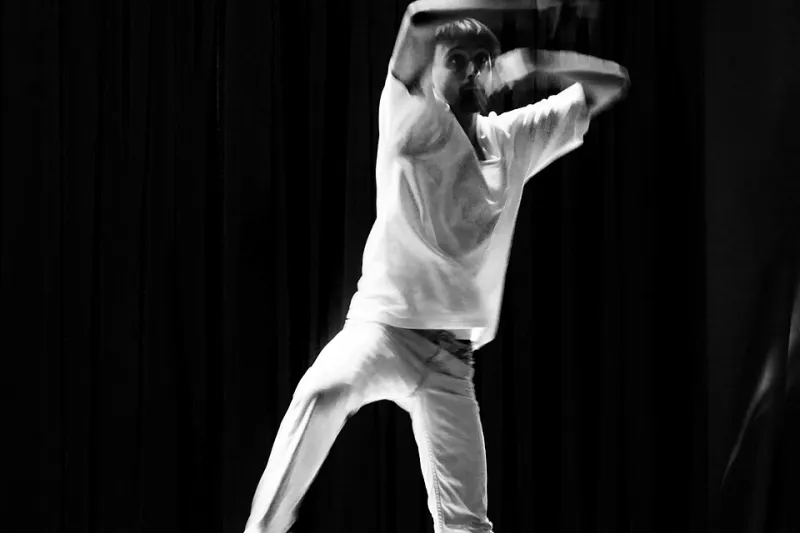
Photo: Ruthson Zimmerman ruthson_zimmerman, CC0, via Wikimedia Commons
Somewhere between the algorithmic spoon-feeding and the infinite scroll, a different kind of creator figured something out: if you make it easy, you make it meaningless.
Think about the last time you stumbled onto something that felt genuinely hard to get to. Maybe it was a newsletter with no archive. A podcast that drops episodes on a rotating schedule nobody bothered to post publicly. A Bandcamp page with no preview clips, just a title and a price. That friction — that minor, maddening inconvenience — probably made the thing feel more real than anything your feed served you this morning.
That's not an accident. It's a design philosophy. And it's spreading.
The Algorithm Gave Everything, So People Started Wanting Nothing From It
For the better part of a decade, digital platforms optimized ruthlessly for frictionlessness. Autoplay. Infinite scroll. One-click purchasing. The logic was clean: remove every obstacle between a user and consumption, and consumption goes up. It did. And then something weird happened — the content started to feel disposable in direct proportion to how easy it was to get.
Creators noticed. Audiences noticed. And a subset of both started moving in the exact opposite direction.
What's emerging now is something that doesn't have a clean name yet, but you can feel it if you spend enough time in the weirder corners of the internet. Creators are deliberately introducing what UX designers would call "pain points" — and reframing them as features. The inconvenience is the point. The effort required to access something is part of what makes it worth accessing.
Bad Audio as a Velvet Rope
Audio quality is one of the clearest examples. High-fidelity production has never been cheaper or more accessible — a decent USB mic, some free software, and you're technically broadcasting at a professional standard. Which is exactly why some creators are going the other way.
Low bitrate recordings, room noise left in, no compression, no leveling. It sounds like a mistake until you realize it's deliberate. The effect is that casual listeners bounce immediately. They're not the target. The people who stick around are the ones who can tolerate — or actively prefer — the rawness. The bad audio functions as a filter, not a flaw.
This is friction as curation. The creator isn't trying to reach everyone. They're trying to reach the ones who'll lean in.
Obfuscated Schedules and the Anti-Drop
Release schedules are another lever. Conventional creator wisdom says consistency is everything — post on a cadence, train your audience to expect you, never let the algorithm forget you exist. That logic still holds for people playing the growth game by standard rules.
But there's a countermovement built around what you might call the anti-drop. Content arrives without announcement. No countdown. No teaser posts. You either find it or you don't, and if you don't, that's fine. Some creators actively avoid posting about new work on their own social channels, letting it spread through word of mouth or not at all.
The effect is that discovery feels earned. When someone finds the thing, they feel like they found the thing — not like it was pushed into their eyeline by a distribution machine. That feeling of discovery creates a different kind of attachment than passive consumption ever could.
Unintuitive Interfaces as Identity
Then there are the interfaces themselves. This one's a little more niche, but it's worth paying attention to. Some creators — particularly in music, visual art, and experimental writing — are building their own distribution channels specifically to resist usability conventions.
We're talking about websites that require you to figure out the navigation. Newsletters formatted to look like terminal output. Stores where you have to email someone to buy something. None of this is accidental lo-fi charm — it's a deliberate rejection of the UX standards that platforms like Spotify, Instagram, and Substack have normalized.
The message embedded in the interface is: if you can't be bothered to figure this out, you're probably not who this is for.
It's elitist, in a weird democratic way. There's no paywall, no invite-only list. The barrier is just patience and curiosity. Which, depending on your values, might be the most honest filtering system available.
Inconvenience as Status Signal
Here's where it gets culturally interesting. In certain online subcultures, engaging with difficult-to-access content has become a status marker in its own right. Knowing about the thing — having done the work to find it — signals something about who you are and where you spend your attention.
This isn't entirely new. Obscurity has always carried cache in subcultures, from crate diggers to zine collectors. But the digital version has a particular texture because the inconvenience is often manufactured rather than naturally occurring. The creator chose to make it hard. And the audience chose to show up anyway. That mutual choice creates a kind of covenant that algorithmic convenience fundamentally can't replicate.
The attention economy runs on volume. This is something else — an economy of deliberate scarcity, where the currency is effort rather than eyeballs.
The Audience You Actually Want
There's a practical argument underneath all the philosophy here, and it's worth stating plainly: a smaller audience that's genuinely invested is often more valuable — financially, creatively, emotionally — than a large audience that's passively along for the ride.
Creators who've built friction into their work consistently describe their audiences in terms that don't show up in analytics dashboards. Words like "committed," "curious," "patient." These are people who sought the work out, worked to understand it, and chose to stay. That's a different relationship than the one you build by going viral.
Conversion rates are higher. Churn is lower. The community that forms around deliberately inconvenient content tends to be tighter, weirder, and more durable than the ones assembled by algorithmic momentum.
Tuning Your Own Signal
None of this is a prescription. The mainstream creator economy exists for a reason, and most people operating in it are doing exactly what makes sense for their goals. Reach matters. Accessibility matters. Not everything needs to be a puzzle.
But the friction movement is pointing at something real about the relationship between ease and meaning. When everything is optimized for instant consumption, the things that require something of you start to feel different. They feel like signals rather than noise.
IGGET//DF has always been about finding that frequency — the one you have to actually tune for, that doesn't just land in your lap. The creators engineering inconvenience into their work are doing something similar. They're building for the people who want to tune in, not just the ones who happened to be in the room.
The attention tax is real. The question is whether you're paying it to scroll past something, or paying it to actually arrive somewhere.