Sacred Relics: The Tech Archaeologists Treating Obsolete Hardware Like Holy Scripture
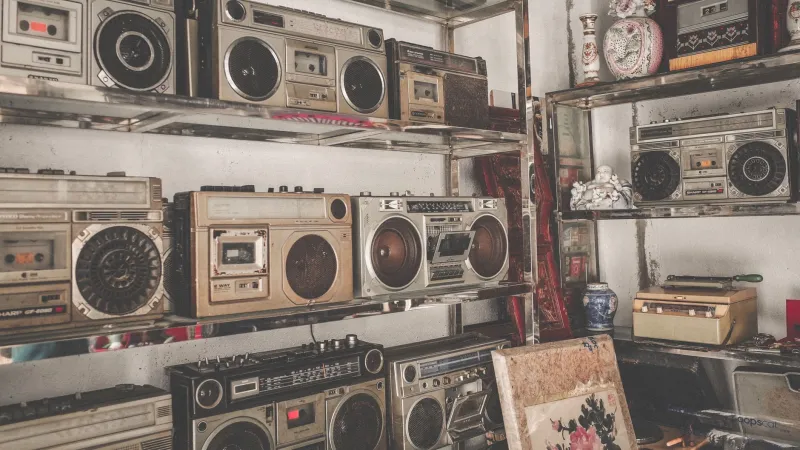
Somewhere in a climate-controlled spare bedroom in Columbus, Ohio, there's a shelf dedicated entirely to devices that can no longer connect to anything. A Sidekick II. A Zune 30GB in brown. A first-gen Amazon Fire Phone still in its original packaging. None of them turn on. That's not the point.
The person who owns them—who asked to go by Maren online—has spent the last four years carefully cataloging, photographing, and writing long-form documentation about each piece. She cross-references firmware versions. She tracks down original packaging. She corresponds with former engineers through LinkedIn cold messages that most people would never have the nerve to send.
"These aren't toys to me," she says. "They're primary sources."
The Church of Dead Hardware
Call them tech archaeologists, digital preservationists, or just obsessive collectors—whatever label fits, there's a whole quiet ecosystem of them scattered across the US, and they're getting harder to ignore. Online forums, Discord servers, and subreddits dedicated to obsolete hardware have been growing steadily for years. But something shifted recently. The vibe changed. It stopped feeling like nostalgia and started feeling more like... reverence.
There's a meaningful difference between someone who wants to boot up a Game Boy Color for a hit of childhood serotonin and someone who is documenting the specific plastic compound used in the shell of a 1998 iMac because they're worried no one else will. The first person is having fun. The second person feels a responsibility.
That second group is what we're talking about here.
They're building personal archives that function less like collections and more like libraries—or honestly, more like reliquaries. The objects themselves are almost secondary to the metadata surrounding them. Box inserts. Regional variants. The exact UI flow of a discontinued operating system. The particular way a dead social platform handled photo compression in 2009.
Why Now, and Why Them
It's worth asking why this is happening with such urgency among people in their mid-twenties to late thirties. Part of the answer is obvious: this cohort grew up with the technology that's now dying. The devices hitting the obsolescence cliff right now are the ones that shaped how millennials and older Gen Z users first understood what the internet was.
But there's something deeper going on too. These collectors have watched platforms disappear overnight. They've seen link rot eat entire corners of the web. They watched Vine die. They watched Google Reader get murdered in broad daylight. They watched MySpace lose its music archive. They understand, viscerally, that digital things do not persist by default. Someone has to do the work.
"Every generation has stuff it didn't bother to save because it seemed too common to bother," says Derek, a software developer in Portland who runs a documentation project focused on early 2000s PDA operating systems. "And then one day it's just gone. I think our generation is the first one that grew up digital enough to understand how fast that happens."
The ten-year rule is a thing people in these communities talk about openly. If a technology is only a decade old, it feels too recent to mourn—but that's exactly the window where things get lost. The devices are cheap enough that nobody's hoarding them for value. The software is too new to be retro-cool. The companies that made them have moved on. That middle zone is where the record gets erased.
Ritual and Practice
What makes this community feel genuinely distinct from standard collector culture is the almost liturgical quality of how they approach the work. There are protocols. There are standards. People share documentation templates. There are debates—sometimes heated ones—about the ethics of modifying a device to make it functional versus keeping it in original failed condition as a more accurate artifact.
Some collectors won't power on devices at all, worried about capacitor damage or battery swell corrupting the physical object. Others argue that a device you've never seen run is an incomplete document—that you need to experience the UI, the loading times, the specific way a notification sound played, to really understand what the thing was.
Maren falls into the second camp. She has a power station setup specifically for safely running devices with degraded batteries. She screen-records every session. She's building what she describes as a "living archive"—documentation that captures not just what the hardware looks like but what it felt like to use.
"The tactile stuff matters," she says. "The way a button clicked. The lag on a touchscreen that wasn't quite fast enough. That's part of the document too."
The Museum That Doesn't Exist Yet
There's no single institution doing this work at scale. The Computer History Museum in Mountain View does important preservation, but its scope skews toward landmark machines—mainframes, early personal computers, the stuff that already has cultural consensus around its importance. The everyday devices, the mid-tier phones and streaming boxes and handheld consoles that most people actually used, tend to fall through the cracks.
So the community does it themselves, distributed and informal, coordinating through forums and shared drives and the occasional group effort to track down a former product manager who might remember why a particular feature worked the way it did.
Derek describes it as "building the museum in the margins." Nobody hired them. Nobody's paying them. They're just doing it because the alternative is watching the record disappear.
There's something that resonates about that—the idea that the most honest documentation of a technological era might not come from the companies that built it or the journalists who covered it, but from the people who quietly refused to throw it away. Who looked at a cracked-screen tablet gathering dust in a Goodwill bin and thought: someone needs to know this existed.
Signal Preserved
Maren's shelf isn't going anywhere. She's added a WinMo device recently, a Motorola Q she found at an estate sale still loaded with the previous owner's calendar entries from 2007. She hasn't deleted them.
"It felt wrong," she says. "That's someone's life in there. The phone is the artifact but those calendar entries are part of it. The whole thing is the document."
She's not sure who the archive is ultimately for. Maybe other researchers someday. Maybe no one. But she keeps building it anyway, device by device, firmware note by firmware note, treating each piece of dead technology like it contains something worth protecting—because, she'd argue, it does.
The signal is still in there. Somebody just has to keep it from going fully dark.