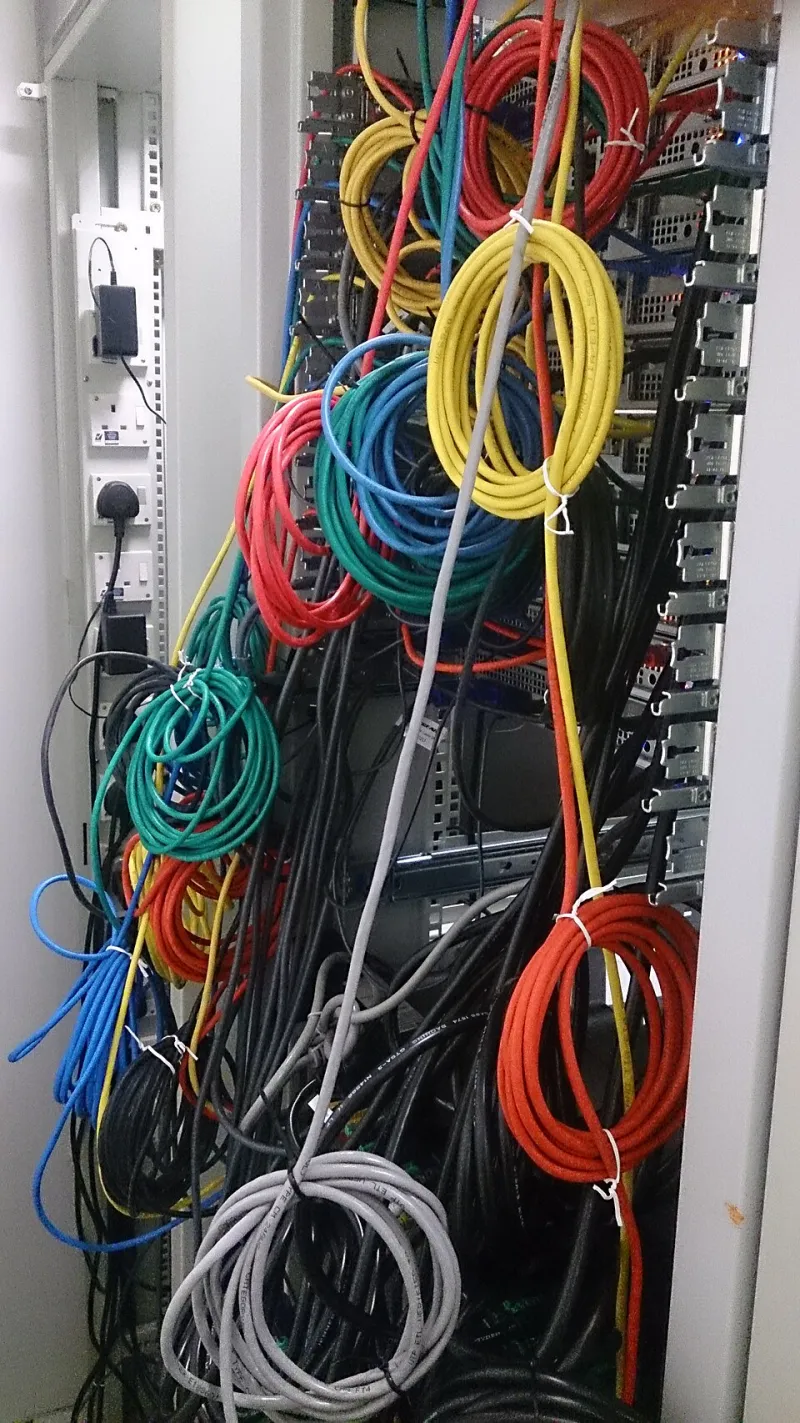
Off the Books: The Rogue Developers Wiring a Secret Layer Beneath the Internet

The internet you use every day has a lobby. Clean, well-lit, full of branded endpoints and rate limits and API keys that expire on a schedule somebody else chose. There are docs. There are support tickets. There are quarterly deprecation notices sent to an email address you stopped checking.
And then there's the basement.
A diffuse, largely anonymous community of developers has been quietly building infrastructure that operates somewhere beneath the floor of corporate-sanctioned connectivity. They call their creations different things — shadow routes, ghost endpoints, phantom protocols — but the function is basically the same: direct, undocumented pathways for data to move between people without asking a platform for permission first.
These aren't hacks in the traditional sense. Nobody's breaking in. They're building something new in the negative space that the official internet left behind.
Why Bother Going Underground
The easy answer is control. The longer answer is philosophy.
For a certain kind of developer, the trajectory of the modern internet reads like a slow-motion foreclosure. Open standards got swallowed by walled ecosystems. Interoperability became a liability. APIs that once felt like civic infrastructure got sunset the moment they stopped serving a quarterly earnings call. The people who built things on top of those APIs — sometimes whole communities, sometimes just small weird projects that mattered to specific people — got left holding the bag.
So some of them stopped building on top of other people's infrastructure and started building their own. Not loudly. Not with a Substack launch post or a Product Hunt listing. Just quietly, in the gaps.
"The documented web is basically a lease agreement," one developer, who asked to be identified only by a handle, told us over an encrypted message thread. "You can paint the walls but you can't knock them down. At some point you want to own the building."
Owning the building, in this context, means designing protocols that don't route through any central authority. No API gateway logging your requests. No rate limiter deciding how much of your own data you can access per hour. Just two nodes, talking directly, using a handshake that was never submitted for approval.
What These Things Actually Look Like
Phantom protocols vary wildly in scope and sophistication. Some are barely more than creative abuse of existing standards — tunneling meaningful data through fields that were designed to carry something else, the digital equivalent of writing a letter inside a birthday card. Others are genuinely novel: custom transport layers, bespoke encryption schemes, peer-to-peer meshes that self-organize without a central directory.
A recurring pattern is the shadow API — a functional interface that mimics the structure of a legitimate endpoint but operates entirely outside any company's infrastructure. You hit a URL, you get data back, nobody in a server farm in Northern Virginia logged the request. The people running these things often describe them as "for friends," which is both accurate and a convenient legal posture.
One project that circulated through certain developer forums earlier this year was described as a "social backbone" — a lightweight API that let a small group of people share status updates, files, and location data entirely peer-to-peer, with no persistent server in the middle. The project had no name, no GitHub repo, no documentation beyond a single dense README that assumed you already knew what you were doing. That was intentional.
"Documentation is a surface area," another developer explained. "Every word you write is a word someone can screenshot, quote, or subpoena."
The Technical Philosophy Running Underneath
What ties these projects together isn't a particular technology stack — it's an attitude toward infrastructure itself. These developers tend to think about connectivity the way certain urban planners think about desire paths: the trails people wear into grass because the official sidewalk doesn't go where they actually need to go.
The official internet has desire paths too. Places where the documented routes are inefficient, surveilled, or just unavailable. The phantom protocol builders are the ones laying gravel on those trails.
There's a deep skepticism of abstraction layers here. Where mainstream development culture has trended toward higher and higher levels of abstraction — platforms on top of platforms, SDKs wrapping SDKs — the underground builders tend to want to get closer to the wire. They like protocols that do one thing. They distrust anything that requires you to trust a third party you can't audit.
This puts them in an odd cultural position. They're often technically sophisticated enough to get well-paying jobs at the companies whose infrastructure they're routing around. Some of them have those jobs. The phantom protocol work happens on nights and weekends, in the margins of a day job that pays for the hardware.
The Risk Profile Nobody Talks About
Building covert infrastructure isn't without complications, and the people doing it generally know that.
The legal terrain is murky in ways that depend heavily on what exactly you're building and what it's being used for. Shadow APIs that route around a platform's terms of service exist in a gray zone that most lawyers would prefer not to visit. If the data moving through your phantom protocol belongs to someone else's platform, you're potentially in Computer Fraud and Abuse Act territory, depending on how a prosecutor wants to read it.
Most of the developers in this space have clearly thought about this, which is why the culture leans so hard into obscurity. The best defense, in their view, is simply not being findable. No press. No branding. No centralized server to seize. If the only way to find the project is to already know someone who's using it, the attack surface stays small.
There's also a security paradox baked into the whole thing. Undocumented protocols don't get audited. The same opacity that keeps them off the radar of corporate legal teams also keeps them off the radar of security researchers. The developers building these things tend to be good, but good isn't the same as verified.
Signal Through the Floor
What's actually interesting about the phantom protocol scene isn't any individual project — it's what the existence of the scene says about the state of the internet as a shared resource.
When enough developers independently arrive at the same conclusion — that the documented, approved, officially supported internet doesn't go where they need to go — and start building their own routes in parallel, that's a signal. Not necessarily a comfortable one. But a real one.
The open internet was supposed to be the underground. The radical, ungoverned, permission-free substrate that made everything else possible. Somewhere along the way it got lobbied and acquired and terms-of-serviced into something that requires a corporate account to meaningfully participate in.
The basement builders are, in their weird, paranoid, deliberately underdocumented way, trying to get back to that original frequency. Whether they'll get there — whether what they're building can scale past a few hundred nodes, whether it can survive contact with actual adversaries, whether it means anything beyond a very sophisticated form of spite — is genuinely unclear.
But they're building. And they're not asking anyone for permission.
Which, depending on your read of internet history, is either the most dangerous thing or the most hopeful thing you can say about a developer in 2025.